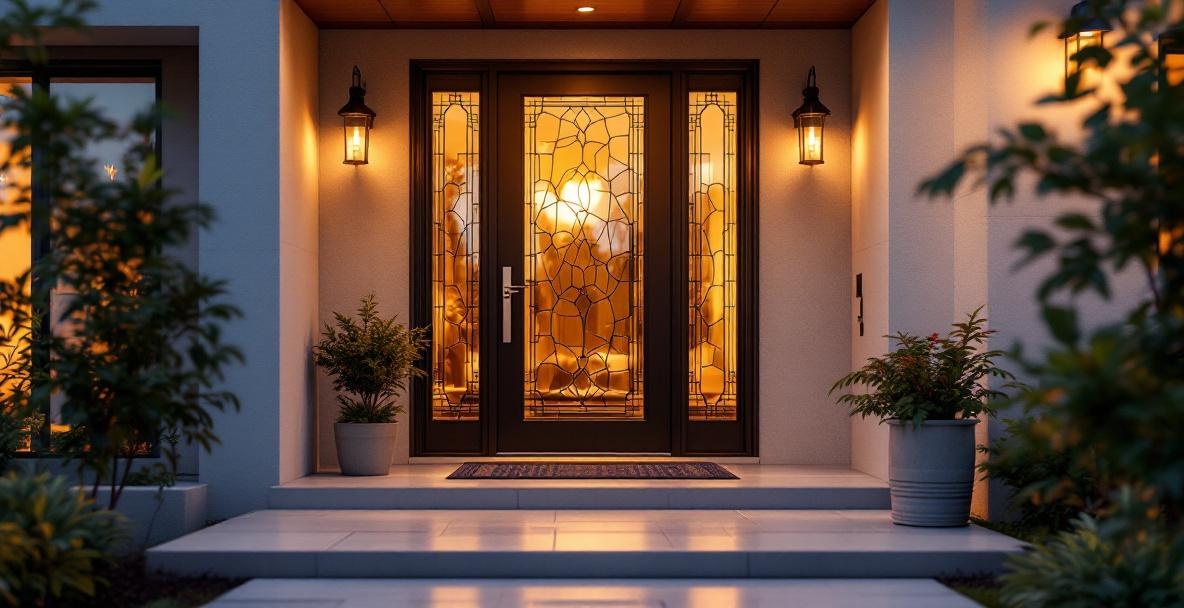
Glass exterior panel doors and sidelights let daylight into a Dallas foyer while preserving weather and security performance. Options range from full-glass entry doors with tempered safety glass to partial-glass inserts framed by wood or fiberglass, plus sidelight panels that flank the door on one or both sides. All exterior glass installations in Texas require tempered or laminated safety glass per IRC R308, and Low-E coatings are recommended for DFW's intense summer sun.
Entry doors with glass transform the feel of a foyer more than almost any other single change. A solid wood door creates a closed, heavy first impression. A door with a glass panel — or a door flanked by tall sidelight glass panels — fills the foyer with daylight, frames views of the front garden, and makes the entrance feel larger and more welcoming. For DFW homes, where front-facing entries often point east or west and catch strong morning or evening sun, glass panel doors are both a design choice and a daylighting strategy.
Infinity Glass fabricates and installs custom glass exterior panel doors, door inserts, and sidelight panels across Dallas, Fort Worth, and surrounding DFW communities. Also see our commercial storefront glass installation and our custom glass door inserts guide for related exterior applications.
What Are Glass Exterior Panel Doors and Where Are They Used?
Glass exterior panel doors are entry doors where a significant portion of the door surface is made of glass — either the entire door face (full-glass doors), a large central panel within a surrounding frame (partial-glass inserts), or decorative glass sections integrated into traditional paneled doors. They are used as front entry doors, back patio doors, side entries, and secondary garden-facing entrances.
Common glass exterior door configurations:
Full-glass doors: The entire door face is a single large pane (or a divided pattern of panes) set into a frame of wood, fiberglass, aluminum, or steel. These maximize daylight and views but require careful privacy planning for front-facing entries.
Partial-glass panel doors: A smaller glass insert — typically the upper 1/3 to 1/2 of the door — set into a solid door with the lower portion remaining opaque. These balance daylight with privacy and security below the sightline.
Divided-light doors: Multiple smaller glass panes separated by muntins or grilles, creating a traditional or craftsman-style pattern. The overall glazed area may still be substantial, but the subdivided appearance reads as more traditional.
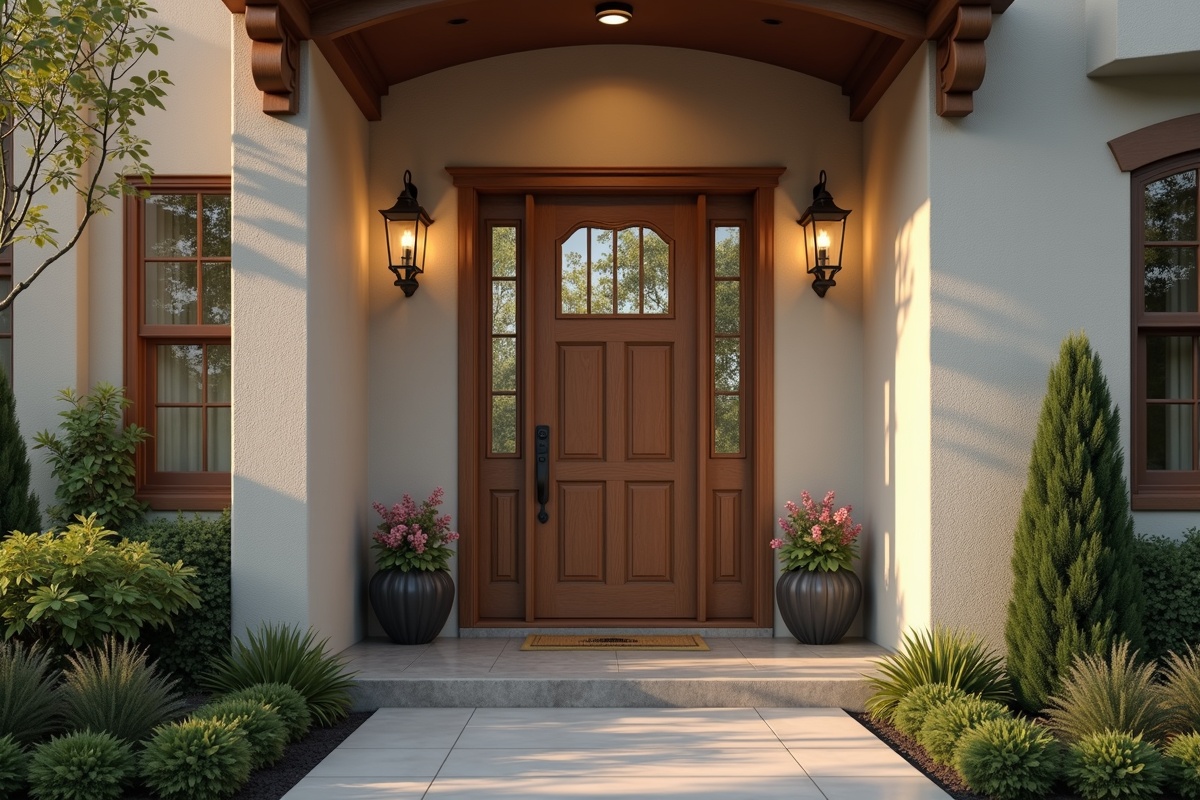
Sidelight panels: Tall narrow glass panels flanking one or both sides of the entry door. These add daylight and visual balance without changing the door itself — a popular choice for traditional Dallas homes where the door needs to remain solid.
Transom panels: Horizontal glass panels above the door (and sometimes above sidelights). A transom plus two sidelights plus a glass-panel door creates the maximum daylighting effect for a foyer.
Types of Glass Used in Exterior Doors: Safety and Energy Considerations
Exterior glass doors in Texas must use tempered safety glass or laminated safety glass per IRC Section R308 (IRC 2024) — this is non-negotiable code. Beyond the safety minimum, Low-E coated glass and insulated glass units (IGUs) significantly reduce heat gain and utility costs in DFW's hot climate.
Glass options for exterior doors:
Tempered glass: Heat-treated to be 4-5x stronger than annealed glass and to break into small blunt pieces rather than dangerous shards. Required by code for all glazing in doors and within 24 inches of doors.
Laminated glass: Two layers of glass bonded around a plastic interlayer. Holds together when broken (similar to automotive windshields), provides enhanced security against forced entry, and offers better sound attenuation. Often preferred for high-security applications.
Insulated glass units (IGUs): Two panes of glass separated by a spacer and sealed with inert gas (typically argon) between them. Standard on quality exterior doors. The double-pane construction reduces heat transfer significantly vs single-pane glass.
Low-E coated glass: Microscopic metallic coating reflects infrared heat while allowing visible light through. In Texas climate, Low-E glass on exterior doors reduces heat gain 30-40% vs uncoated glass (DOE 2025) — a meaningful utility savings for west-facing and south-facing entries.
Decorative glass options: Frosted, reeded, seeded, beveled, and leaded-look glass patterns provide privacy while still admitting light. For front entries where the interior foyer is visible from the street, decorative glass is often preferred over clear glass.
30-40%
heat gain reduction from Low-E glass on exterior doors in Texas climate vs uncoated glass (DOE 2025)
Full Glass vs Partial Glass Exterior Doors: Which Is Right for Dallas Homes?
The choice between full-glass and partial-glass exterior doors in Dallas depends on privacy needs, sun exposure, architectural style, and security priorities. Full-glass doors maximize daylight and views but require privacy treatment (frosted, reeded, or tinted glass) for most front entries. Partial-glass doors balance daylight with visual privacy below eye level.
| Daylight admitted |
| Privacy (clear glass) |
| Perceived security |
| Energy performance |
| Typical cost range |
| Best use case |
Full-glass doors work well when:
- The entry faces a private courtyard, backyard, or side garden rather than the street
- The homeowner prioritizes daylight and indoor-outdoor connection
- Frosted, reeded, or tinted glass provides adequate privacy for the location
- The architectural style is modern or contemporary
Partial-glass doors work better when:
- The entry faces a public street with neighbors close by
- Security is a priority and the homeowner prefers a more substantial-feeling door
- The architectural style is traditional, craftsman, or transitional
- A decorative glass insert is desired as a focal feature
How Much Do Glass Exterior Panel Doors Cost in Dallas TX?
Glass exterior panel doors in Dallas typically cost $1,200-$5,500 installed, with pricing driven by door size, glass type, frame material, hardware, and installation complexity. Sidelight panels add $600-$2,200 each depending on width and glass specification. Custom glass inserts added to existing doors are substantially less expensive than full door replacement.
Pricing breakdown by project type:
| Project | Typical DFW Cost (Installed) | |---------|------------------------------| | Partial-glass fiberglass entry door | $1,200-$2,800 | | Full-glass fiberglass entry door | $1,800-$3,800 | | Wood entry door with glass panel | $2,500-$5,500 | | Steel entry door with glass | $1,000-$2,500 | | Sidelight panel (per side) | $600-$2,200 | | Transom panel (above door) | $500-$1,500 | | Custom glass insert (into existing door) | $400-$1,200 | | Decorative/leaded glass upgrade | +$300-$1,500 over standard |
Cost multipliers:
- Low-E insulated glass: +15-25% over single-pane
- Laminated security glass: +20-35%
- Custom etched or decorative glass: +$300-$1,500 depending on design complexity
- Impact-rated glass (for coastal Texas): not typically required in DFW
- Oversized doors (over 36"x80"): +20-40% for custom sizing
Glass entry doors with sidelights typically return 50-70% of cost in home value increase (Remodeling Magazine 2025) and are consistently rated among the highest-ROI exterior upgrades.
What Are the Energy Efficiency Considerations for Glass Entry Doors?
In DFW's hot climate, the primary energy concern with glass entry doors is summer heat gain from direct sun exposure — particularly for east-facing entries (morning sun) and west-facing entries (afternoon sun). Low-E coated insulated glass units address this effectively, and the U-factor and Solar Heat Gain Coefficient (SHGC) ratings determine real-world performance.
Energy performance metrics to check:
U-factor: Measures heat transfer through the door. Lower is better. Quality insulated glass doors should have a U-factor of 0.30 or lower for DFW climate.
Solar Heat Gain Coefficient (SHGC): Measures how much solar radiation passes through the glass. Lower is better in hot climates. For DFW, target SHGC of 0.25 or lower for west- and south-facing entries.
Visible Transmittance (VT): How much visible light passes through. Higher VT means more daylight. Target VT of 0.50 or higher to preserve the daylighting benefit.
ENERGY STAR certification: Look for ENERGY STAR Southern Climate Zone certification for DFW-appropriate performance.
What Permits Are Required for Exterior Door Installation in Dallas?
In the City of Dallas, replacing an existing exterior door with a similarly-sized door generally does not require a building permit, but enlarging the rough opening, adding sidelights where none existed, or structural modifications do require a permit. Always verify current requirements with the Dallas Building Inspection division — regulations change periodically.
Typical permit scenarios:
No permit usually required:
- Like-for-like door replacement (same size, same opening)
- Changing door material (wood to fiberglass, etc.) without modifying opening
- Adding a glass insert to an existing door
Permit typically required:
- Enlarging the rough opening to accommodate a larger door or sidelights
- Removing structural studs or headers
- Changing the exterior wall dimensions
- New construction or major renovation
Additional considerations:
- HOA approval may be required even when a city permit is not — check HOA covenants for architectural review
- Historic district homes (parts of East Dallas, Winnetka Heights, Munger Place) have additional Historic Preservation oversight
- Any structural change affecting load-bearing walls requires engineered details
Design Ideas: Glass Exterior Doors for DFW Home Styles
DFW homes span multiple architectural styles, and the right glass entry door varies accordingly — transitional and modern homes favor full-glass or large-panel doors, traditional and craftsman homes work better with divided-light patterns or decorative glass, and Spanish/Mediterranean homes often use arched openings with wrought-iron-look grilles over glass.
Style-appropriate glass door recommendations:
Modern/contemporary (Plano, Frisco, Southlake new builds):
- Full-glass pivot doors with clean aluminum or steel frames
- Tall sidelights full-height
- Low-iron glass for maximum clarity
- Minimal or no grilles — the clean glass itself is the statement
Transitional (updated homes in North Dallas, Coppell, Flower Mound):
- 3/4-glass fiberglass doors with simple 4-6 light patterns
- Paired with matching sidelights and transom
- Satin nickel or matte black hardware
Traditional/colonial (Highland Park, University Park):
- 6-over-6 or 8-over-8 divided-light glass patterns
- Wood doors with leaded or beveled decorative insert glass
- Paired with shorter sidelights with matching grille pattern
- Oil-rubbed bronze or polished brass hardware
Craftsman/bungalow (M Streets, Oak Cliff, parts of Fort Worth):
- 3-lite horizontal or 4-lite horizontal glass patterns
- Stained wood doors with textured or art glass inserts
- Matching sidelights in a complementary pattern
- Dark hardware — oil-rubbed bronze or matte black
Spanish/Mediterranean (older Preston Hollow, historic Fort Worth):
- Arched door tops with arched glass to match
- Wrought-iron grille overlays over glass panels
- Heavy wood doors with smaller accent glass panels
- Antique brass or iron hardware
Frequently Asked Questions
Are glass exterior doors energy efficient for Dallas Texas climate?
Yes — when specified with Low-E coated insulated glass units, glass exterior doors are energy efficient even in DFW's hot climate. Target U-factor below 0.30 and SHGC below 0.30 for south and west exposures. ENERGY STAR certification for the Southern Climate Zone confirms DFW-appropriate performance. Uncoated single-pane glass in an exterior door is inefficient and should be upgraded.
What glass type is required for exterior doors in Texas?
Per IRC Section R308, all glazing in exterior doors must be tempered or laminated safety glass. Tempered glass is most common and meets code. Laminated glass is specified when enhanced security or sound attenuation is desired. Annealed (standard) glass is not permitted in exterior doors or within 24 inches of an exterior door.
Can glass exterior door panels be frosted for privacy?
Yes — glass exterior door panels and sidelights can be fabricated with frosted, sandblasted, etched, reeded, seeded, or tinted glass for privacy while still admitting daylight. This is particularly common for front entries where the interior foyer is visible from the street. Decorative privacy glass is typically a $300-$1,500 premium over clear glass.
What is the best frame material for exterior glass doors in DFW?
Fiberglass is the most common high-value choice for DFW — it resists warping, expansion, and contraction from Texas heat and humidity cycles better than wood or steel. Wood doors are preferred for traditional homes but require more maintenance. Steel is strong and economical but conducts heat. Aluminum and thermally-broken aluminum frames work well for modern and full-glass door applications.
Do glass exterior doors increase home security risk?
Properly specified glass exterior doors do not significantly increase security risk. Tempered glass is 4-5x stronger than standard glass. Laminated glass provides enhanced forced-entry resistance because it holds together when broken. Multi-point locking systems, deadbolts, and reinforced strike plates are more important security factors than the glass itself. For concerned homeowners, laminated security glass and smart lock systems address the risk effectively.
Schedule Your Glass Exterior Door Consultation
Glass exterior panel doors are one of the highest-impact, highest-ROI exterior upgrades for a DFW home. The right door configuration — full-glass, partial-glass, or decorative-panel — depends on your home's architecture, sun exposure, privacy needs, and design direction. Infinity Glass specifies, fabricates, and installs custom glass exterior doors, sidelights, and transoms across Dallas, Fort Worth, and surrounding DFW communities.
Also see our commercial glass installation guide and our glass partitions for office spaces for related commercial applications.
Contact Infinity Glass for a free measurement, glass specification, and installed quote for your Dallas-area home.
Related reading: