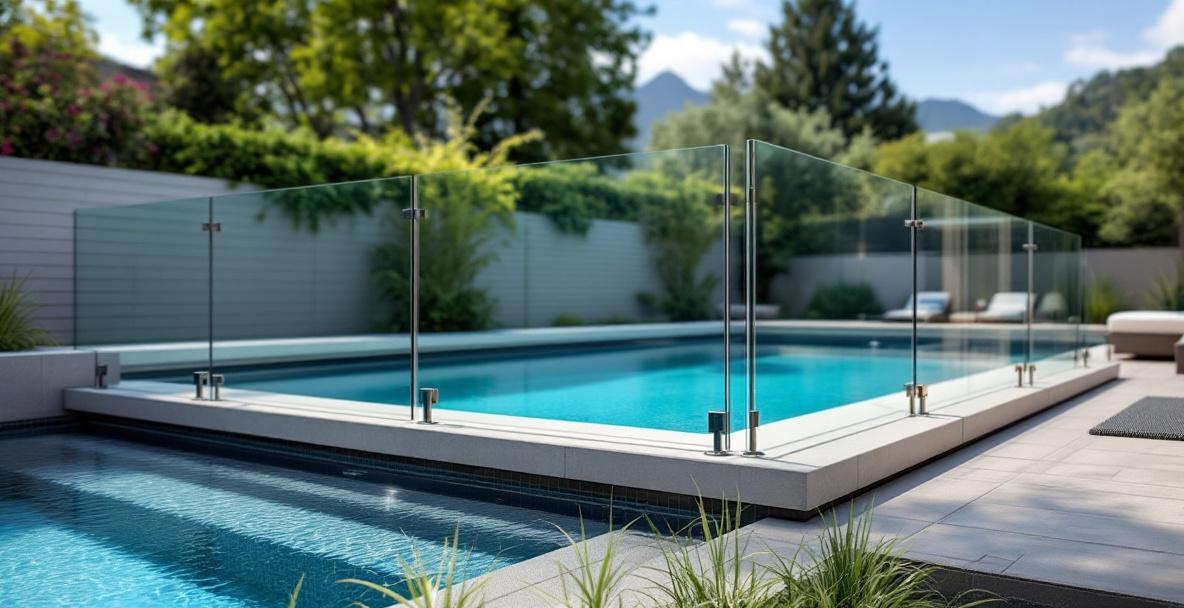
Glass fence panel installation in Texas uses 1/2 in. tempered glass anchored with spigots, core-drilled mounts, or base shoe channels. Texas pool code requires barriers at least 48 inches tall with no openings larger than 4 inches. Frameless glass pool fences cost $150 to $350 per linear foot installed across DFW.
Texas homeowners, country clubs, and hospitality developers choose glass fence panels to preserve sightlines across pools, patios, and gardens while meeting strict pool barrier code. Frameless glass looks like there's no fence at all — which is exactly why it's one of the fastest-growing segments in the DFW outdoor living market. This guide walks property owners, GCs, and landscape designers through every glass fence system Infinity Glass & Glazing installs across Texas and what to expect from a code-compliant installation. Pool and deck barriers share the same hardware and engineering as our glass railing systems for exterior applications.
What Are Glass Fence Panels and Where Are They Used?
Glass fence panels are structural tempered or laminated glass sheets used as outdoor barriers around pools, patios, rooftop decks, and property lines. Panels typically range from 5 to 6 feet tall and 3 to 6 feet wide, anchored with stainless steel spigots, core-drilled mounts, or aluminum base shoes. They suit applications where visibility, wind resistance, and premium aesthetics matter more than the lowest cost.
Common DFW applications include backyard pool enclosures (most common), rooftop patio perimeters at hotels and restaurants, country club pool decks, boundary walls on wooded lots where views matter, and decorative privacy screens between outdoor dining zones. Commercial properties increasingly spec glass fencing for its low maintenance and premium perception.
Frameless Glass Pool Fences: Safety and Design in Texas
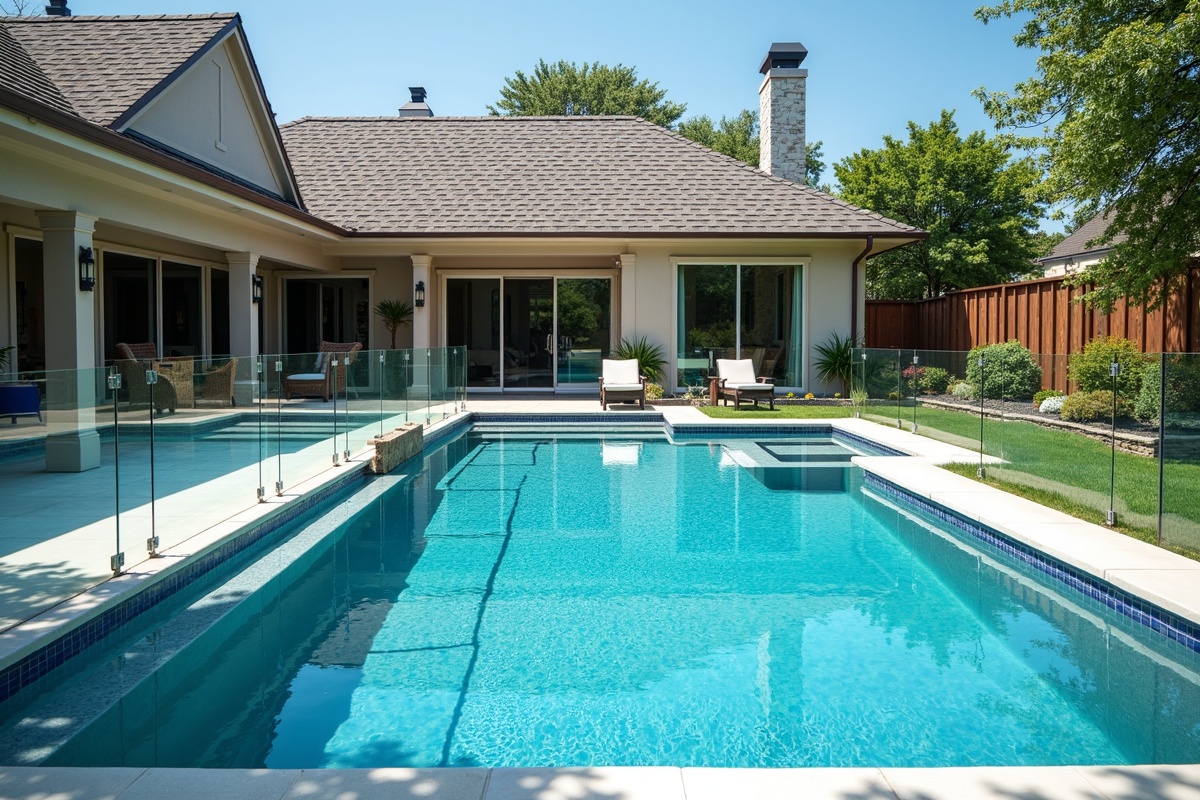
Frameless glass pool fences use spigot-mounted or core-drilled 1/2 in. tempered glass panels to create a code-compliant pool barrier with minimal visual interruption. Texas Health and Safety Code Chapter 757 plus local amendments require pool barriers at minimum 48 inches tall, with spacing and opening restrictions that frameless glass easily satisfies (Texas Health and Safety Code 757).
48 in.
Minimum pool barrier height required under Texas Health and Safety Code Chapter 757
For pool fencing specifically, self-closing self-latching gates with latches minimum 54 inches above grade are required. Infinity Glass & Glazing fabricates frameless glass gates with matching hardware and integrated hinges that meet these requirements out of the box.
Glass Privacy Screens: Creating Outdoor Privacy with Glass
Glass privacy screens use frosted, acid-etched, tinted, or patterned glass panels to block sightlines while still allowing light through. They're common between townhouse patios, around outdoor dining areas at restaurants, and at rooftop hotel bars where open-feeling privacy matters. Glass privacy screens range from 6 to 8 feet tall and can be integrated with planters and trellises for multi-layered outdoor design.
For Texas pool fencing specifically, code requires clear or minimally patterned glass that still meets the "no handholds or footholds" requirement. Heavy textures or horizontal mullions may disqualify a panel system. Verify your design intent with the AHJ before ordering custom-patterned glass.
What Glass Thickness Is Required for Texas Fence Panels?
Texas fence panels use 1/2 in. (12mm) tempered safety glass as the standard, with 3/8 in. (10mm) acceptable on shorter panels and protected applications. Taller panels (6 ft+) and high-wind exposures may require 5/8 in. or laminated construction. All glass must be fully tempered per ASTM C1048 or laminated per ASTM C1172 (ASTM 2024).
| 4 ft (pool fence) |
| 5 ft |
| 6 ft |
| 8 ft+ |
How Much Do Glass Fence Panels Cost in Texas?
Glass fence panels in Texas cost $150 to $350 per linear foot installed, including materials, hardware, labor, and standard site preparation. A typical 60-foot residential pool fence runs $9,000 to $18,000 installed (HomeGuide 2025).
$150-$350
Per linear foot installed cost range for frameless glass pool fencing in Texas (HomeGuide 2025)
Self-closing glass gates add $1,500 to $3,500 each. Core-drilled installations (glass embedded directly into concrete deck) cost 15 to 25% more than spigot-mounted systems but eliminate visible hardware. Commercial and hospitality jobs with larger volume see pricing closer to $120 to $220 per linear foot. The DFW frameless pool fence segment is growing roughly 12% annually on new home construction (NAHB 2025).
Texas Pool Barrier Code Requirements for Glass Fencing
Texas Health and Safety Code Chapter 757, plus the International Residential Code as adopted by your city, govern pool barriers. Key requirements include a minimum 48-inch barrier height, maximum 4-inch clearance at the bottom, no openings larger than 4 inches, self-closing self-latching gates opening outward, and no climbable features on the pool side.
Texas municipalities including Dallas, Plano, Frisco, and Fort Worth enforce pool barrier code at permit and final inspection. A non-compliant fence can shut down a pool and in some cases void your homeowners insurance. Always confirm your installer provides a code-compliance letter at project closeout.
For commercial pools (hotels, country clubs, apartments), additional requirements apply under Texas Department of State Health Services rules, including stricter gate specifications and lifeguard signage integration.
Installation Process: What to Expect for Glass Fence Installation
Glass fence installation in Texas follows a defined sequence from survey to final inspection. Expect 2 to 5 days on-site for a typical 60 to 100 linear foot residential pool fence.
- 1
Site survey and layout
Measure the pool deck or fence line, mark gate locations, and identify any slope, drainage, or clearance issues before ordering glass. - 2
Hardware procurement and glass fabrication
Spigots, base shoes, and gate hardware are ordered; glass panels are cut, tempered, polished, and heat-soak tested at the glass plant. - 3
Anchor installation
Spigots are through-bolted into concrete footings or core-drilled into existing deck; base shoes are epoxy-anchored and shimmed to level. - 4
Glass panel setting
Panels are set between hardware, shimmed plumb, and locked with retention screws or wedge gaskets. - 5
Gate installation and adjustment
Self-closing hinges are torqued, latch heights verified, and gate swing tested per code. - 6
Final inspection and cleaning
Hardware is torque-verified, glass is polished, and the installation is handed off with a code compliance letter.
What Texas pool fence code requirements apply to glass panels?
Texas Health and Safety Code Chapter 757 requires pool barriers minimum 48 inches tall, with no opening large enough to pass a 4-inch sphere, no openings greater than 4 inches at the bottom, and self-closing self-latching gates opening outward. Glass panels must be fully tempered safety glass or laminated construction meeting ASTM standards.
Are glass fence panels safe in high-wind DFW weather?
Yes — glass fence panels are engineered to DFW wind loads using appropriate thickness (1/2 in. to 5/8 in. tempered) and correctly torqued hardware. Tempered glass shatters into small granular pieces on impact rather than sharp shards, and laminated construction retains fragments on the interlayer. Quarterly hardware inspections are recommended after severe weather events.
How do glass fence panels compare in cost to wrought iron?
Glass fence panels cost 2 to 3x more than traditional wrought iron ($150-$350 per LF vs $50-$120 per LF) but offer unobstructed views, zero rust, and premium aesthetics. Lifetime cost is often comparable because glass doesn't require periodic painting, rust treatment, or section replacement that wrought iron needs over 15 to 25 years.
Can glass panels be used on a sloped yard?
Yes — glass fence panels can step down a slope using shorter panels or stepped post spacing. Each panel remains level while hardware steps down with the grade. Spigot systems handle slopes well, while continuous base shoe systems are best on flat or minimally sloped surfaces. Site survey confirms the best approach.
Do glass fence panels require maintenance or cleaning?
Glass panels require routine cleaning (monthly) with pH-neutral cleaner to prevent hard-water spotting, and annual hardware inspection for spigot torque and gate self-closing function. Stainless steel hardware handles humidity with no special treatment. Expect 25+ years of service with standard maintenance in DFW climate.
Also see our glass railings installation Texas overview and our commercial glazing contractor Texas guide.
Planning a glass fence or pool barrier in Texas? Contact Infinity Glass & Glazing for a site survey, code-compliant spec, and a fixed installation quote across DFW.