Glass office doors in Dallas TX range from $800 to $3,500 per door installed, depending on whether the system is frameless, framed, or sliding (HomeGuide 2025). Frameless patch-fitting doors are the premium option at $2,000–$3,500; aluminum-framed doors run $800–$1,800. Both provide visual openness and professional aesthetics that standard solid doors cannot.
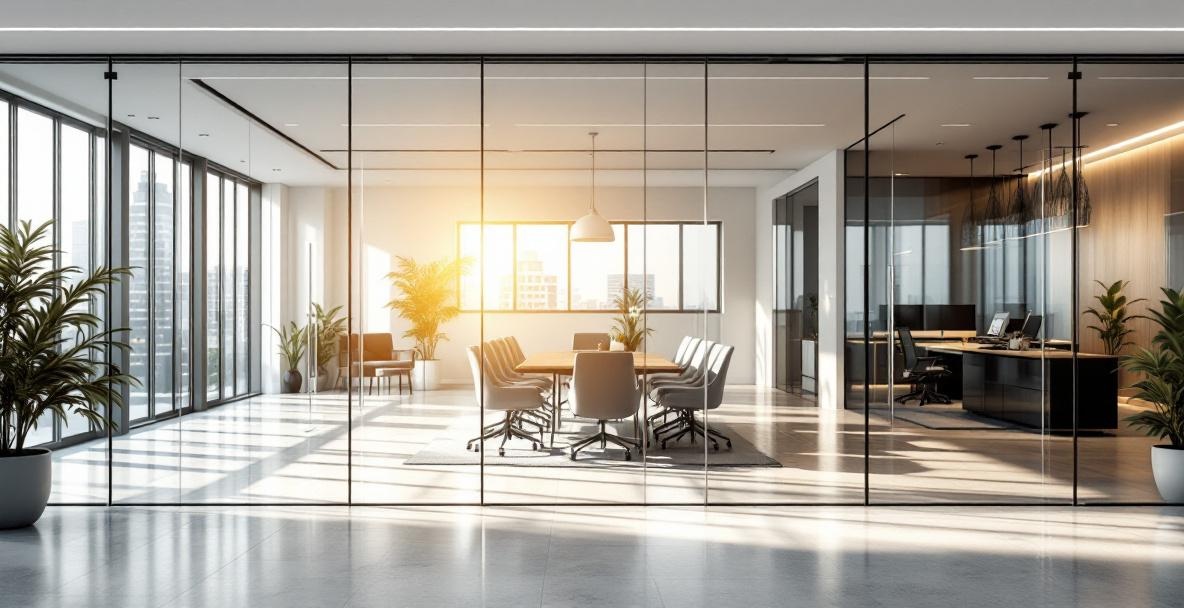
Glass office doors solve the fundamental tension in modern Dallas office design: the need for acoustic and physical separation without sacrificing the visual openness that makes an open-plan office feel collaborative rather than confined. A glass door into a conference room allows staff to see whether a meeting is in progress without interrupting. A glass door to a private office reads as less insular than a solid door.
This guide covers the glass office door types most commonly installed in Dallas offices, what each costs, and what to look for when specifying.
[INTERNAL-LINK: Glass partitions for Dallas offices -> /blog/glass-partitions-office-dallas]
What Types of Glass Office Doors Are Available in Dallas?
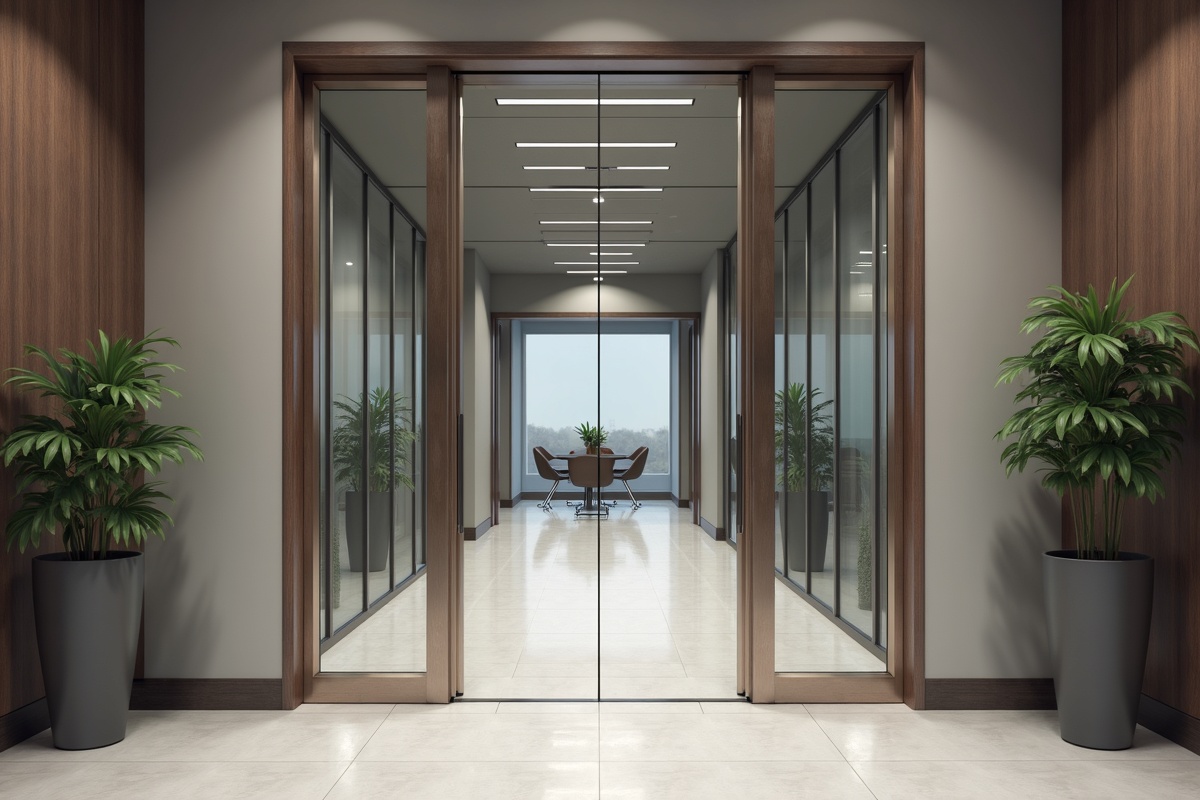
Three glass office door systems dominate Dallas commercial installations: frameless patch-fitting doors (no visible frame, hardware clamped directly to glass), aluminum-framed doors (glass set in a perimeter frame), and sliding glass door systems (frameless or framed panels that slide rather than swing). Each serves different space and budget priorities.
Frameless patch-fitting glass doors:
- 3/8-inch or 1/2-inch tempered glass panel with exposed hardware (hinges, top/bottom pivot, handle)
- Maximum visual transparency — the door reads as nearly invisible when closed
- Hardware in matching finish to the office system (matte black, brushed nickel, brushed gold)
- Swing in either direction (specified at order)
- Cost: $2,000–$3,500 per door installed
- Best for: executive offices, high-visibility conference rooms, premium office buildouts
Aluminum-framed glass doors:
- Glass panel in a perimeter aluminum frame, hung like a traditional door on hinges
- Less hardware-intensive than frameless — standard commercial door hardware
- Can match the frame system on adjacent glass partitions for a unified look
- Cost: $800–$1,800 per door installed
- Best for: standard office buildouts where frameless appearance isn't required
Sliding glass door systems:
- Frameless or framed panel that slides along a top-mount track
- No swing clearance required — important in tight layouts where swing radius is constrained
- Available in single-panel and barn-door configurations
- Cost: $1,500–$3,000 per door installed (track hardware adds cost)
- Best for: conference rooms with limited swing clearance, open-plan offices where accessibility matters
$800–$3,500
installed cost range for glass office doors in Dallas TX — frameless patch systems at high end, framed at low end
How Do Glass Office Doors Compare to Solid Doors?
Glass office doors cost more upfront than solid commercial doors but deliver visual openness, natural light flow, and a modern aesthetic that solid doors cannot provide. The practical tradeoff is acoustic performance — glass office doors achieve STC 30–40, while solid wood-core commercial doors achieve STC 38–45.
| Installed cost |
| Visual transparency |
| Natural light |
| STC acoustic rating |
| Maintenance |
| Appearance in 10 years |
The acoustic tradeoff is the primary reason glass doors don't replace all solid doors in office environments. For spaces where confidentiality matters — HR offices, legal offices, medical suites — a solid door or a double-glazed glass door system provides better sound isolation. For most general office applications (conference rooms, manager offices, collaborative rooms), the STC 30–40 performance of a glass door is acceptable.
What Glass Specifications Apply to Office Doors?
Commercial glass office doors in Texas require tempered glass meeting ASTM C1048 — this is a code requirement, not optional (IBC/ICC 2021). The standard thickness for frameless doors is 3/8-inch (lightweight and manageable) or 1/2-inch (more stable in taller openings). Frosted, satin, or filmed glass provides privacy alternatives to clear.
Glass options for office doors:
Clear tempered: Maximum transparency, standard specification for most applications. Required by code to be tempered (safety glass) in commercial door applications.
Frosted or satin: Diffuses vision while transmitting light. Common for private offices where workers want privacy but still benefit from transmitted light. Available as factory finish or applied film.
Filmed (partial coverage): Clear above eye level, frosted below (or vice versa). Allows visual check (is someone in the office?) without revealing occupant details. Effective and lower-cost than factory-finished frosted.
Low-iron / ultra-clear glass: Standard clear glass has a slight green tint visible at the edge. Low-iron glass eliminates this for a cleaner edge appearance — specified on premium projects.
What Hardware Is Used on Frameless Glass Office Doors?
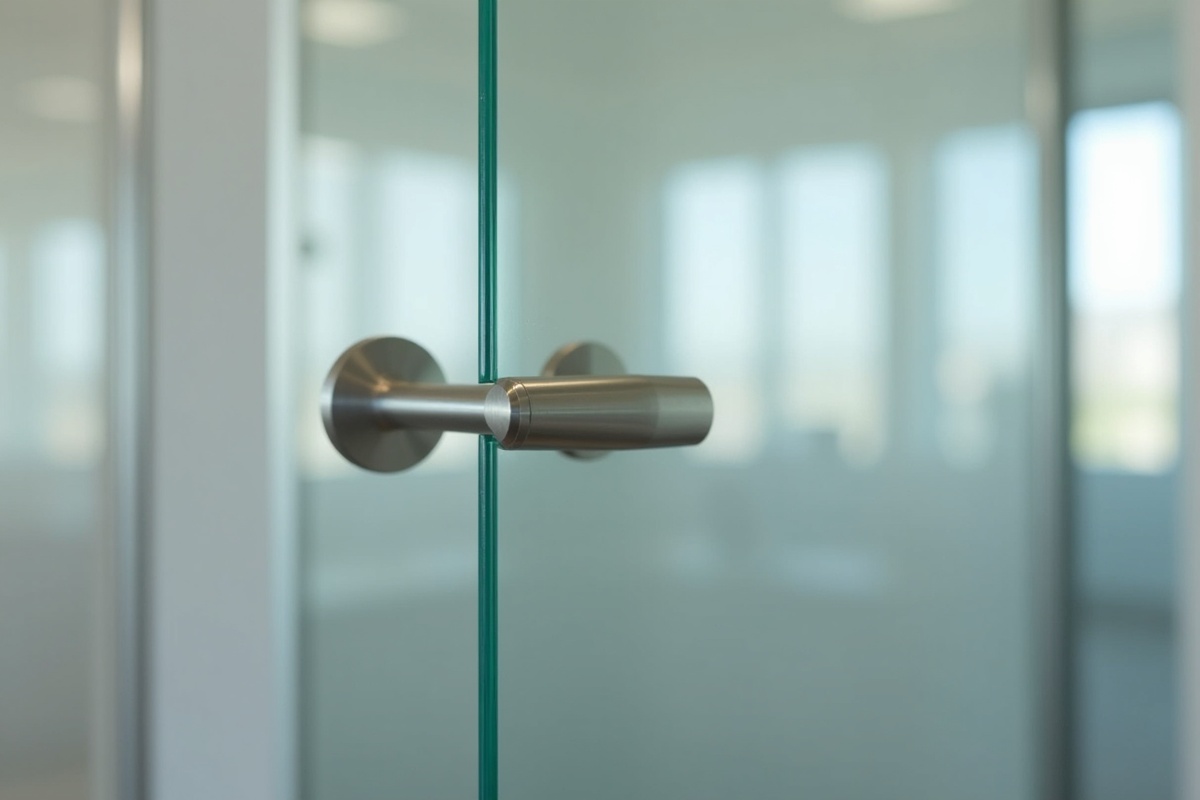
Frameless glass office doors use patch-fitting hardware — hinges, top/bottom pivots, and handles designed to clamp or bolt directly through the glass panel without a perimeter frame. Hardware is specified by finish (matching the office hardware system) and load rating.
Key hardware components for frameless glass doors:
Hinges: Wall-to-glass or glass-to-glass. Wall-mount hinges require a solid wall connection; glass-to-glass hinges connect the door to an adjacent fixed glass panel. Both types must be specified for the glass thickness (3/8" or 1/2").
Floor pivot and top pivot: Frameless doors rotate on top and bottom pivot points. Floor pivot must be recessed into the floor or surface-mounted. Top pivot connects to the head frame or overhead structure.
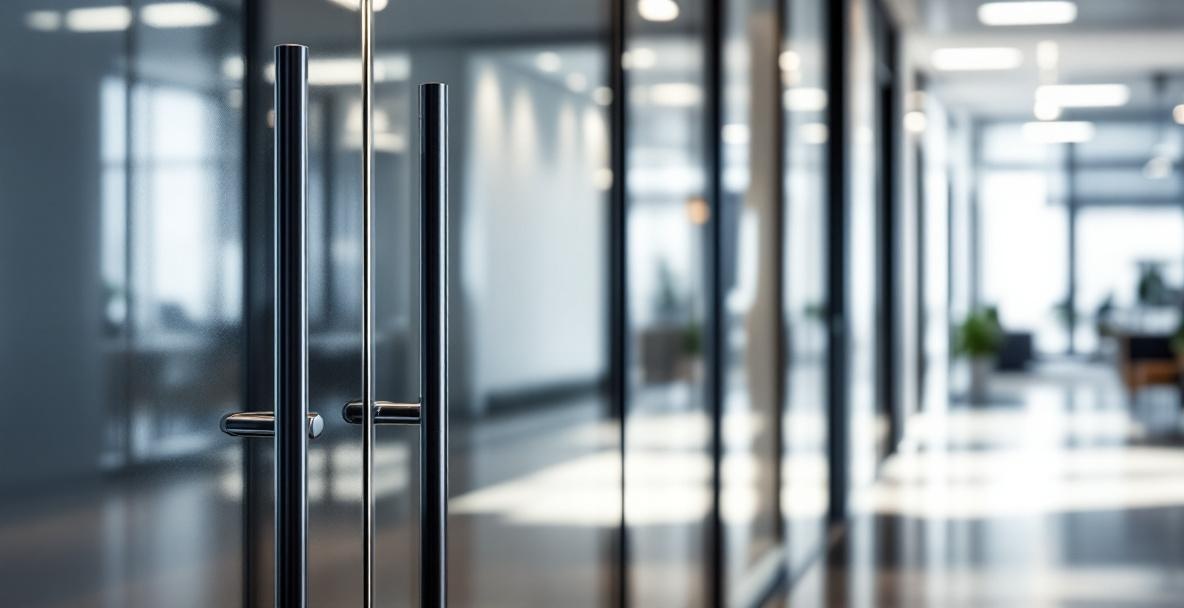
Pull handles: Typically 8-inch, 12-inch, or 18-inch D-pulls or bar handles. Must be specified with through-glass bolt mounting through pre-drilled holes. Hole diameter is typically 15/16 inch — drilled at the fabrication stage, not on-site.
Door stop and hold-open: Strike plates, magnetic hold-opens, and door stops are standard hardware additions. Must be compatible with glass door swing direction.
Infinity Glass & Glazing fabricates and installs glass office doors across DFW — frameless, framed, and sliding systems for Dallas, Fort Worth, Corinth, Frisco, McKinney, and Lewisville. Get a commercial estimate or call (940) 279-1197.
How much do glass office doors cost in Dallas TX?
Glass office doors in Dallas range from $800 to $3,500 per door installed. Aluminum-framed glass doors run $800–$1,800. Frameless patch-fitting glass doors run $2,000–$3,500. Sliding glass door systems run $1,500–$3,000. These prices include glass fabrication, hardware, and installation labor.
Are glass office doors required to be tempered?
Yes — commercial glass doors in Texas are required to use tempered glass meeting ASTM C1048. Tempered glass breaks into granules rather than shards, which is the safety requirement for glass in door applications. Standard (annealed) glass is not permitted in commercial door applications regardless of thickness.
How much sound do glass office doors block?
Glass office doors typically achieve STC 30–40 sound attenuation — enough to prevent conversational speech from being intelligible through the closed door (GlassBuild America 2025). Double-glazed glass door systems can reach STC 40–45. For applications requiring high confidentiality (medical, legal, HR), a solid door or double-glazed system is the appropriate specification.
What is a patch-fitting door?
A patch-fitting door (also called a frameless glass door) uses hardware — hinges, pivots, and handles — that mount directly to the glass panel without a perimeter frame. The hardware "patches" onto the glass rather than framing around it. The result is a door with maximum visual transparency, where the glass itself is the visible element and the hardware is minimal.
Related reading: office glass partitions in Dallas and our commercial glass installation in DFW.
Related reading: