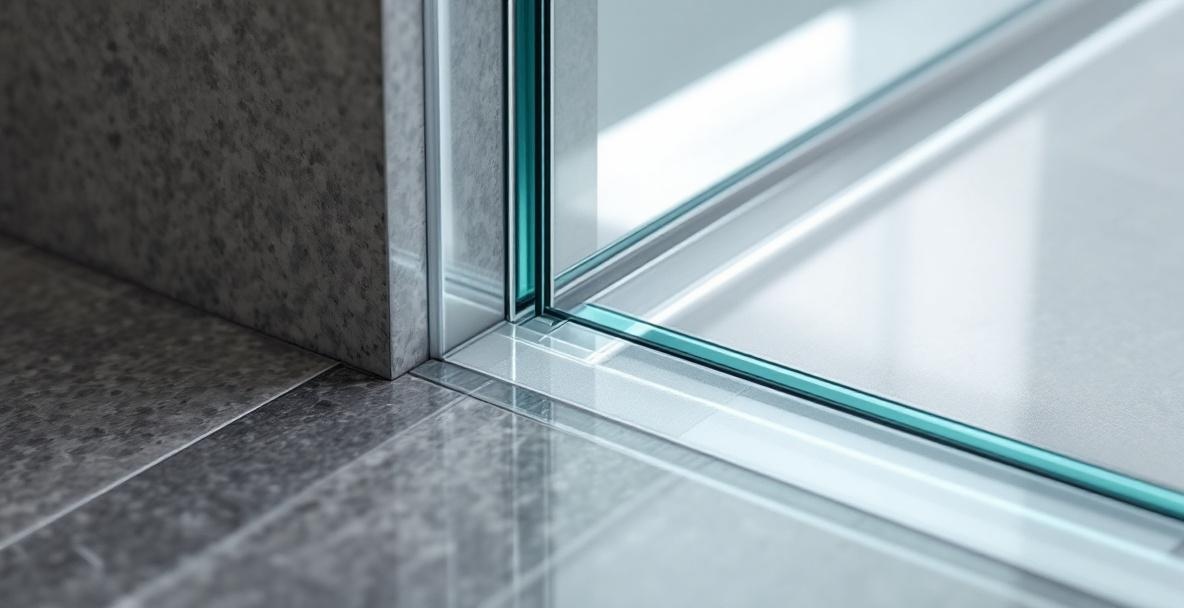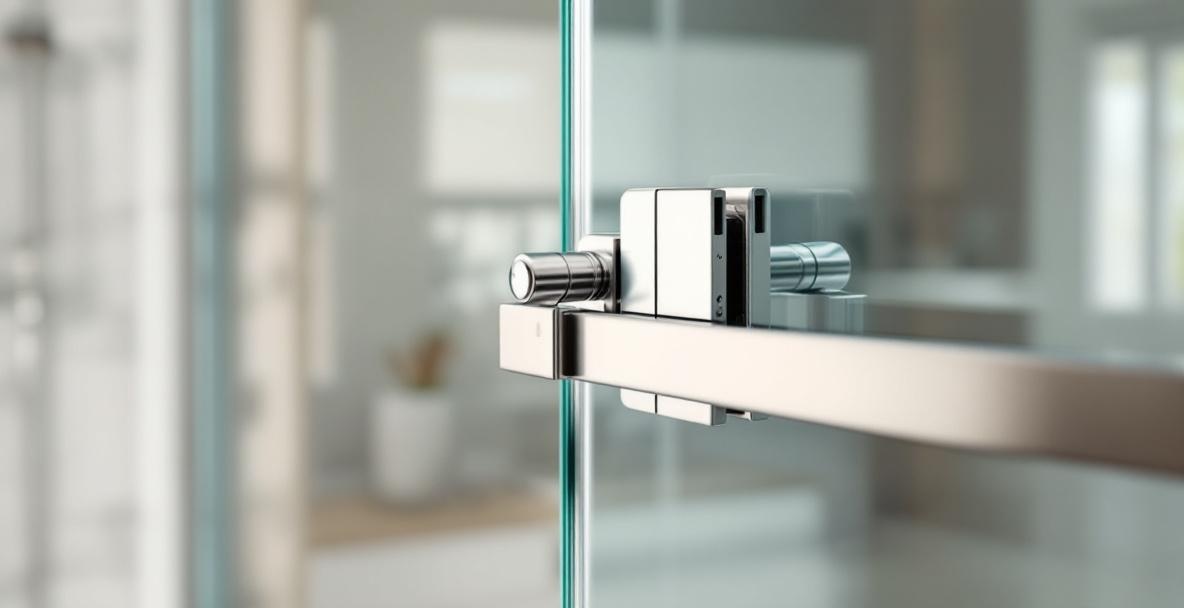
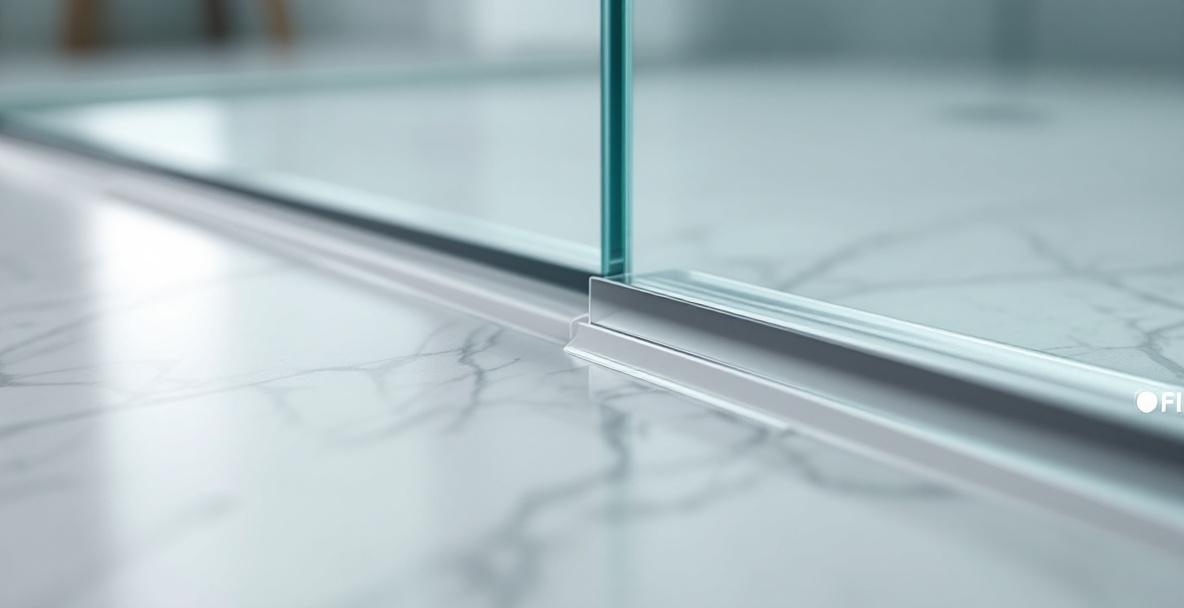
A leaking frameless shower door soaks the floor, swells the subfloor, and grows mold at the base of the glass. Fix it by finding which gap is actually leaking, then fitting the seal that gap takes: a bottom sweep at the threshold, a side wipe on the hinge side, a magnetic strip where two panels meet. Never caulk a moving edge — it fails within weeks.
The most common call we get about frameless shower doors is the same question phrased different ways: "why does my frameless door have gaps, and how do I stop the leak?" The answer is that the gaps are engineered, the leaks are fixable, and the solution is almost never caulk. Frameless shower door gaps of 1/8 to 3/16 inch are considered within normal installation tolerance (NKBA Kitchen & Bath Industry Guidance, 2025).
Improper gap sealing causes 35% of frameless shower door leak complaints (Angi repair cost data, 2025). What "improper sealing" usually means is a homeowner or unqualified installer applying silicone caulk where a flexible seal belongs, gluing the door shut, and then needing the whole enclosure reworked when the caulk fails or the door needs service.
Find Which Gap Is Actually Leaking
Run the shower for two minutes with the door closed and watch from outside where the water tracks onto the floor. Water pooling at the threshold is the bottom sweep. Water running down the hinge side is a side wipe or a dropped hinge. Water at the meeting edge is the magnetic strip. Seal the gap that leaks, not every gap.
This is the step most homeowners skip, and skipping it is why the caulk tube comes out. Donavon and the crew diagnose leaks in this order on every service call: sweep first (it is the part that wears), then hinge alignment, then the wipe, then the strip. A door that leaks down one side and stays dry at the threshold does not need a new sweep — it needs the hinges checked.
Where the water is pooling at the threshold rather than down a side, the curb itself belongs in that diagnosis too: see shower door leaking at the bottom for the sweep, the corner joint and the fall on the curb, which is the one cause no seal can fix.
Two details that change the diagnosis. Water on the outside face of the glass near the hinge usually means the door is closing out of square, not that a seal has failed. And a leak that appears only when someone showers with the head aimed at the door is often not a gap problem at all — it is spray direction, and no seal will fully solve it.
Why Frameless Doors Have Gaps by Design
Frameless shower doors have gaps because they are designed to operate without a surrounding metal frame. The door must swing or pivot freely, so there must be clearance between the moving glass and the fixed surfaces around it. Those clearances are sealed with flexible components — sweeps, wipes, and magnetic strips — rather than the rigid metal channels used on framed doors. The gaps are not a defect; they are structural.
A framed shower door has aluminum or steel tracks around the glass that compress against rubber gaskets, making the door watertight by mechanical compression. A frameless door has nothing around the glass. The only way to both let the door move and keep water inside is to engineer flexible seals that fill the gaps when the door is closed.
1/8 in. to 3/16 in.
typical design gap on frameless shower doors (NKBA, 2025)
DFW installers often use the industry-standard 1/8 in. clearance on the hinge side and 3/16 in. clearance at the threshold. These gaps are filled by the flexible seals — not eliminated. A well-sealed frameless door has the same gap dimensions the day it is installed as it does years later, but the seals filling those gaps are working correctly.
Match the Seal to the Gap Location
Frameless doors have four common gap locations: the bottom gap between glass and floor threshold, the hinge-side gap between the door and the fixed jamb or glass panel, the latch-side or closing-edge gap where two doors or a door and panel meet, and the top gap above the door. Each gap requires a specific seal type matched to that location.
| Gap Location | Correct Seal | Typical Gap Size | |
| Bottom (glass to floor) | Bottom sweep / U-channel | 3/16 in. | |
| Hinge side (door to jamb) | Side wipe seal | 1/8 in. | |
| Latch side (door to panel) | Magnetic strip | 1/16 in. | |
| Top (above door) | Usually unsealed - intentional | Varies | |
| Panel to wall | Silicone caulk | 1/8 in. or less | |
| Panel to floor | Silicone caulk | 1/8 in. or less |
The top gap is normally left open intentionally — it lets steam escape and prevents the door from becoming airlocked when it swings. Trying to seal the top of a frameless enclosure usually causes a new problem (condensation buildup, trapped humidity) without fixing any real leak.
Fix a Bottom Gap With a U-Channel Sweep
Seal the bottom gap with a U-channel bottom sweep sized to the glass thickness. Slide the sweep onto the bottom edge of the glass so the wipe-lip trails along the floor threshold when the door closes. The sweep must be cut 1/16 in. shorter than the door width and oriented with the wipe-lip curving toward the shower interior. Never use silicone caulk to fill a bottom gap — it glues the door to the floor.
- 1
Measure the glass thickness
Frameless doors are typically 3/8 in. or 1/2 in. thick. The sweep must match this dimension exactly or it will not seat. - 2
Measure the door width
Measure the full width of the glass door panel edge-to-edge. Cut the sweep 1/16 in. shorter than this measurement. - 3
Remove any old sweep or adhesive
Clean the bottom edge of the glass with rubbing alcohol. The edge must be fully clean before installing the new sweep. - 4
Slide the sweep onto the glass
Starting at one corner, slide the U-channel onto the bottom edge in one smooth pass. A small amount of soapy water on the channel helps it slide without binding. - 5
Test the seal
Close the door and verify the wipe-lip contacts the floor uniformly. Run a short test shower to confirm no water escapes below the door.
Fix a Hinge-Side Gap With a Side Wipe
Seal the side gap with a vertical vinyl side wipe seal matched to the glass thickness. The wipe press-fits onto the glass edge along the hinge side or latch side of the door. The wipe-lip compresses against the adjacent fixed glass panel or wall jamb, bridging the 1/8 in. clearance gap that allows the door to swing. Installing the wipe backward (lip facing the wrong direction) is the most common DIY mistake.
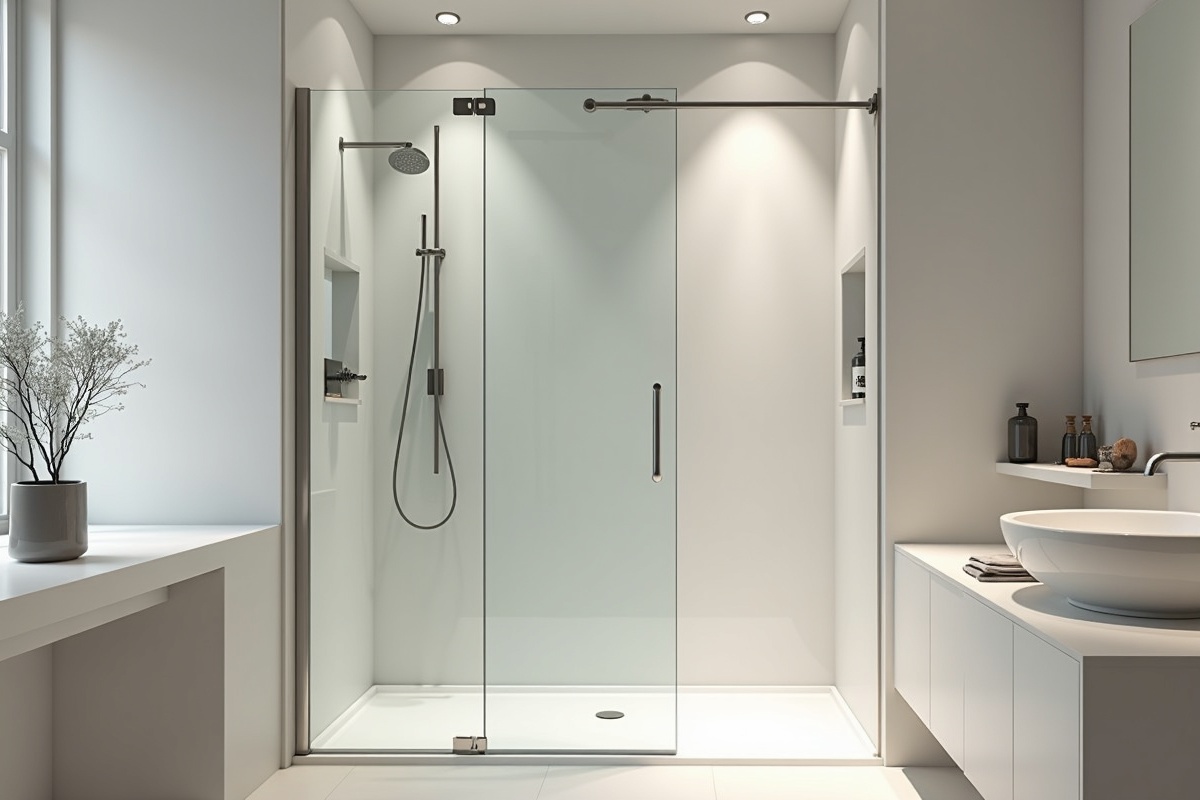
Side wipes come in two main profiles. A straight-edge wipe has a single vertical lip and works on 90-degree door-to-panel meetings. An angled wipe has a lip oriented at 45 or 135 degrees and works on neo-angle or diamond configurations. Match the profile to the geometry of your enclosure — a straight wipe on an angled meeting will leave gaps.
Use Silicone Only Where Nothing Moves
Silicone caulk is the right solution only for permanent joints that do not move — the seam between a fixed glass panel and the wall, the seam between a fixed panel and the floor, and the corner where two fixed panels meet. Never use caulk between the moving door and the frame, between the door and the threshold, or between the door and an adjacent panel. Caulk on a moving part cracks, fails, and glues the door shut.
Silicone sealant in bathrooms should be 100% neutral-cure to prevent mold growth (ASTM International Bathroom Sealant Standards, 2024). Acetoxy-cure silicones (the kind with the strong vinegar smell) off-gas acid during cure and can corrode chrome hardware. Always verify the label reads "neutral cure" or "non-acidic."
Do not use any silicone, adhesive, or caulk to close a gap between the moving shower door and an adjacent fixed surface. Caulk is rigid once cured and is not designed for the tiny flex motion that occurs every time the door opens and closes. It fails within weeks and often pulls finish off the glass or tile when it does.
Where silicone caulk belongs:
- Fixed glass panel to tile wall joint
- Fixed glass panel to shower curb or threshold joint
- Mitered or butt-corner joints between two fixed panels
- Around hinge mounting plates on the wall side
- Wall jamb to tile joint
Where silicone caulk does NOT belong:
- Between the moving door and the jamb
- Between the door and the floor
- Inside the sweep channel or wipe channel
- Between the door and an adjacent swinging door
- Anywhere a seal, wipe, or magnetic strip is already designed to go
Tell a Normal Gap From a Real Problem
A frameless shower door gap is normal if it is uniform along its length, within 1/8 in. to 3/16 in. dimensionally, and sealed by an intact sweep, wipe, or magnetic strip. It is a problem if the gap is uneven across the door (wider at one end than the other), larger than 1/4 in. anywhere, or if the seal that normally fills it is damaged, missing, or installed backward.
A gap that tapers — noticeably wider at one end than the other — is worth separating from the rest, because it usually is not a seal fault at all. It is the shape you get when a square panel meets a wall that leans, and no sweep will close it evenly. That is a fitting problem rather than a maintenance one, and it is what a shower door for out of plumb walls is measured and cut to solve.
Normal gap indicators:
- Uniform 1/8 in. or 3/16 in. gap along the full length
- Intact flexible seal filling the gap when the door is closed
- No water escaping under or around the door during use
- Door operates smoothly and closes square against the jamb
Problem gap indicators:
- Gap wider at top than bottom or vice versa (hinge misalignment)
- Visible gap larger than 1/4 in. anywhere
- Seal is missing, cracked, or installed with the lip facing the wrong direction
- Water consistently escapes during showering
- Light visible through the gap when the door is closed
When to Call a Glass Professional
Call a professional when the gap exceeds 1/4 in. anywhere, when the door is visibly out of square in the opening, when the seal was installed correctly but the leak persists, when the original installation used the wrong seal profile for the door style, or when multiple gaps are leaking at once. These indicate installation-level problems that a seal replacement alone will not fix.
Frameless shower doors are unforgiving of small installation errors. A hinge that is 1/16 in. out of plumb, a threshold that is not perfectly level, or a jamb that is slightly out of square can all create gap patterns that no amount of DIY sealing can fix. A glass professional can measure, shim, and re-hang the door to correct installation-level issues that create leaking gaps — that diagnosis and correction is what our shower door repair service covers, and it is a different job from swapping a seal. If you want to work through the diagnosis yourself first, our step-by-step guide to fixing a leaking shower door covers the checks in order — seal, then sweep, then hinge alignment.
If you're in the northern DFW suburbs, our crews handle frameless shower door installation and repair in Denton, Plano, and Frisco — a leak diagnosis is the same trip as a seal replacement, so we check hinge plumb and threshold level while we're there.
FAQs About Frameless Shower Door Gap Sealing
Is it normal for frameless shower doors to have gaps?
Yes. Frameless shower doors are designed with small clearance gaps so the moving door can swing or pivot freely. Industry-standard gaps are 1/8 in. on the hinge side and 3/16 in. at the bottom (NKBA, 2025). Those gaps are filled by flexible seals — bottom sweeps, side wipes, and magnetic strips — that compress when the door closes. The gap itself is not the problem; a missing or failed seal is.
How much gap is acceptable on a frameless shower door?
Up to 3/16 in. on the bottom and 1/8 in. on the sides is normal and seals correctly with standard components. Gaps larger than 1/4 in. anywhere are outside the tolerance range and indicate either an installation problem (door out of square, threshold not level) or the wrong size glass for the opening. If you can easily slide a credit card through a gap when the door is closed, that section is probably oversized and needs installation review.
Can I use regular silicone on a frameless shower door gap?
No — not between the moving door and any adjacent surface. Silicone caulk is rigid once cured and is not designed for flex motion. It will crack within weeks and often pulls finish off the glass when it fails. Silicone is the right product for permanent joints: fixed glass panel to wall, fixed panel to floor, mitered corner joints between fixed panels, and hinge mounting plates. Always use 100% neutral-cure silicone in bathrooms (ASTM, 2024) — never acetoxy-cure.
Does sealing gaps on a frameless door affect how it opens?
Correctly installed seals do not affect door operation — the wipe-lips and sweep channels are engineered to flex as the door moves. Incorrectly installed seals (wrong size, wrong direction, or glue-down adhesive) can cause the door to drag, stick, or not close fully. If your door suddenly feels harder to open after sealing, the seal is oversized or the lip is facing the wrong way — remove and re-install before accepting it as normal.
How do I stop water from escaping under my frameless shower door?
First, inspect the bottom sweep. If it is cracked, stiffened, or flattened, replace it with a U-channel sweep matching your glass thickness. Second, check that the wipe-lip faces the correct direction (curving toward the shower interior). Third, verify the door closes square — if the sweep contacts the floor on one side but not the other, the door is misaligned and needs hinge adjustment before any seal work will hold. If you have replaced the sweep and the hinges are square and water still escapes, the floor threshold itself may be out of level and requires professional assessment.
Also see our do frameless shower doors leak guide and our shower door seal replacement guide for more on keeping a frameless enclosure watertight long term.
Infinity Glass & Glazing is based in Corinth, TX and serves the full DFW metro including Denton, Lewisville, Flower Mound, Frisco, Highland Village, and surrounding communities with frameless shower door installation, seal replacement, and gap diagnosis. If your frameless door is leaking and you are not sure whether the problem is a failed seal or an installation issue, contact us for a free inspection and we will diagnose it correctly the first time.
Related reading: