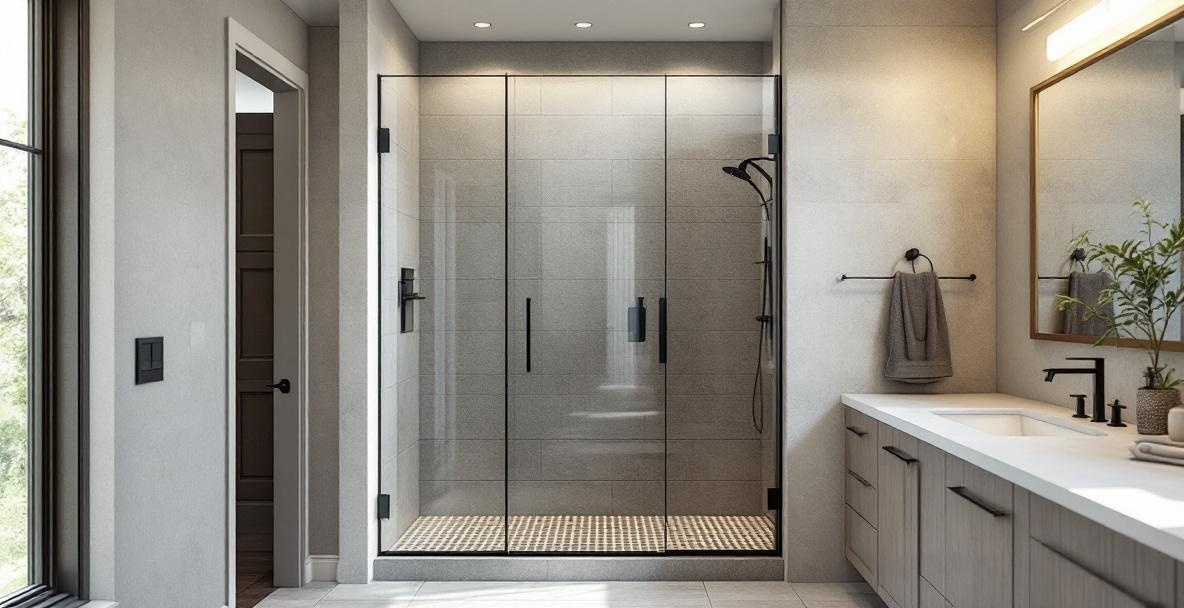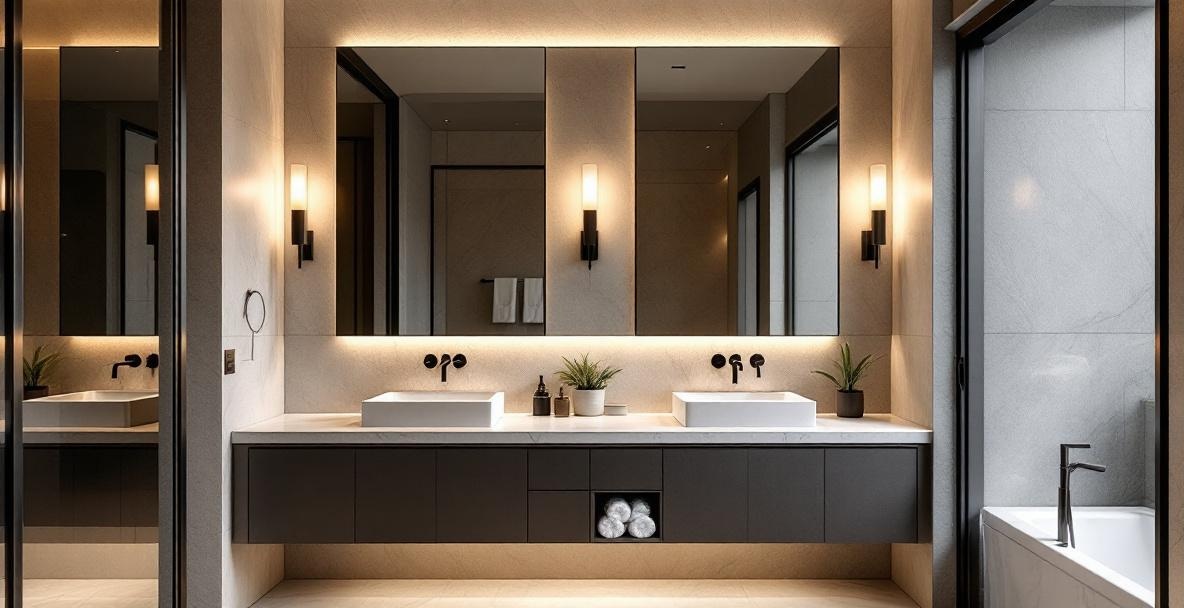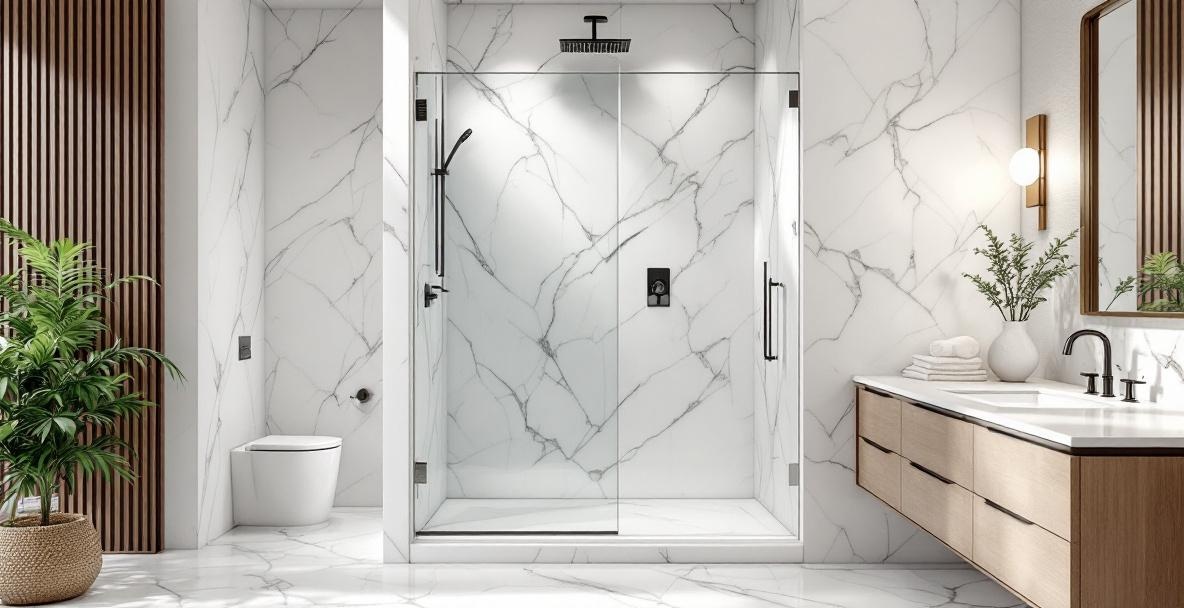
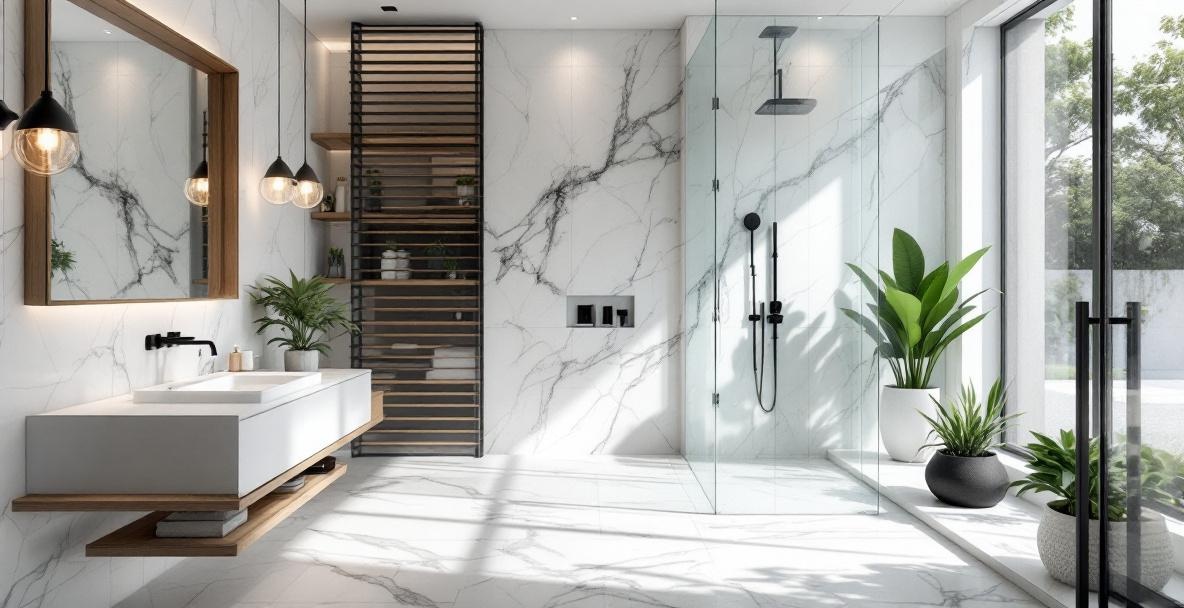
A wet room is a bathroom design where the shower and often the freestanding tub share one continuous waterproofed wet zone -- with floor-to-ceiling glass panels as the primary (or only) partition from the dry portion of the bathroom. Wet room bathrooms command a 5-15% price premium in luxury DFW home listings (Zillow Research 2025), and wet room installations have grown rapidly in Frisco, Southlake, Westlake, Highland Park, and Preston Hollow new construction. Glass panel wet room installations cost $3,000 to $12,000 for the glass portion in DFW (HomeGuide 2025), with full wet-room builds (waterproofing, tile, drainage, plumbing) running $18,000 to $60,000+ depending on scope.
The wet room has moved from European-hotel specification to an increasingly common DFW luxury primary bathroom. The appeal: it combines a walk-in shower and a freestanding soaking tub inside one continuous glass-enclosed wet zone, delivering both the functional shower most homeowners want daily and the soaking tub that signals luxury and provides occasional use. This guide covers what a wet room actually is, why DFW homeowners are choosing them, the glass and waterproofing specifications they require, and where they don't work.
What Is a Wet Room and How Is It Different from a Standard Shower?
A wet room is a bathroom zone where the entire enclosed area is waterproofed and designed to get wet -- floor, walls, and often ceiling. In a standard shower, only the shower enclosure itself is waterproofed and everything outside it stays dry. In a wet room, the "shower zone" expands to include the area around the shower, typically including a freestanding tub, sometimes a bench or vanity zone, all separated from the dry portion of the bathroom by glass partitions. Water containment relies on waterproofing membranes and drainage rather than a sealed door.
The practical difference: in a wet room, you can take a shower anywhere in the enclosed wet zone without water damage. In a standard shower, water is contained to the shower cell by the door and walls.
Five markers that distinguish a wet room from a standard shower:
- Continuous waterproofing: The entire wet-room floor and all walls up to the ceiling (or at least 72-84 inches) are waterproofed with membrane, not just the shower cell
- Floor slope throughout: The floor slopes gently toward drains throughout the wet zone, not only within the shower enclosure
- Drainage: Linear drain along one wall, or multiple point drains positioned to handle water from anywhere in the wet zone
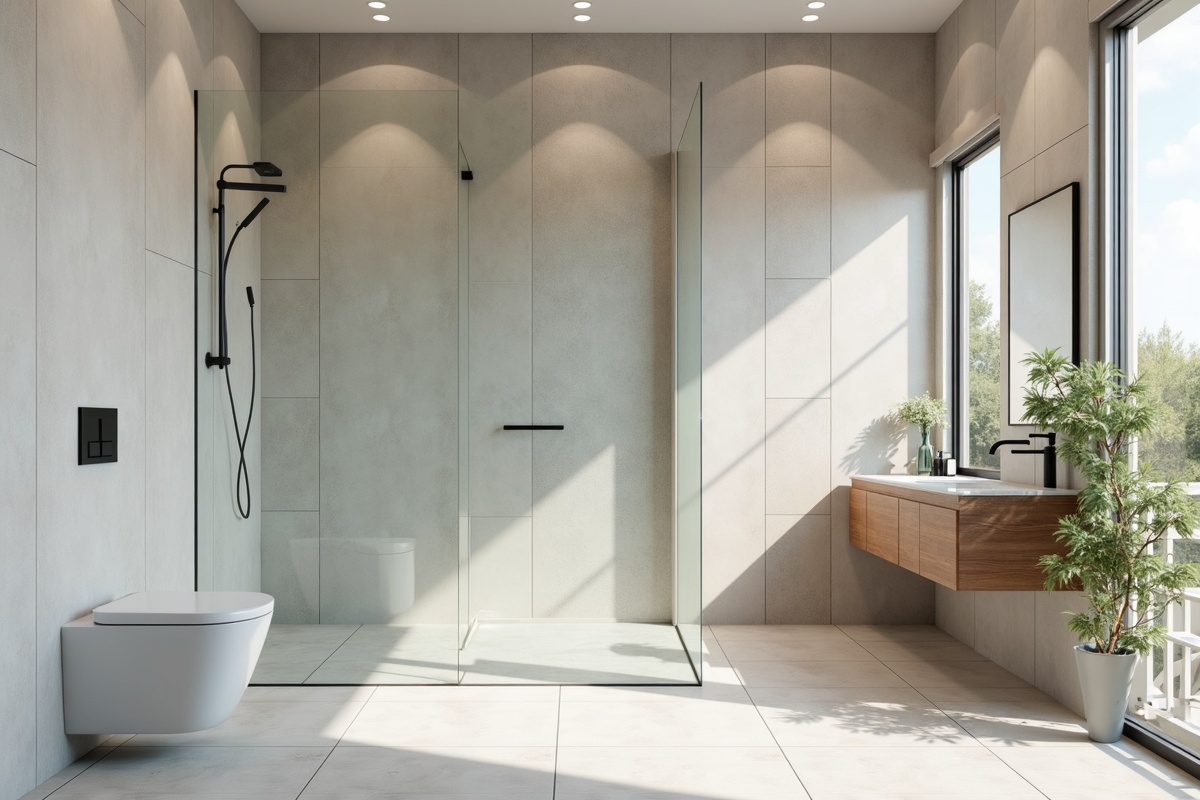
- Glass partition: Floor-to-ceiling glass panels separating wet zone from dry zone, often with a wide pivot entry
- Tub inside wet zone: In most DFW configurations, a freestanding soaking tub sits inside the wet zone alongside the shower
See our guide to walk-in shower design ideas for 2026 DFW and the broader coverage of bathroom renovation glass options for context on where wet rooms fit in the full renovation landscape.
Why Are DFW Homeowners Choosing Wet Room Designs?
DFW homeowners are choosing wet rooms because they solve the shower-or-tub dilemma -- most buyers want a large walk-in shower but also want the freestanding tub signal for daily enjoyment and eventual resale. A wet room delivers both inside one continuous glass-enclosed zone, preserving primary-bathroom square footage that a separate shower-plus-tub layout would consume.
The wet room also solves a photography problem for DFW luxury listings: separate shower-and-tub configurations split the primary bath into two smaller zones that don't photograph as well as a single large wet zone. Wet rooms produce the hero listing photo DFW sellers want -- a dramatic floor-to-ceiling glass enclosure containing a freestanding tub and walk-in shower in one visual frame.
Four reasons wet rooms are growing in DFW:
5-15%
price premium on luxury DFW listings with wet room primary bathrooms compared to comparable homes with standard shower-plus-tub configurations (Zillow Research 2025)
- Combines shower and tub functionality: No trade-off between daily shower and occasional soak
- Preserves square footage: A single wet zone consumes less space than separate shower and tub rooms
- Photographs dramatically: Single large glass-enclosed wet zone is the hero shot in luxury listing photography
- Accessibility-friendly: Curbless entry and continuous floor slope work for aging-in-place and universal design. See aging in place bathroom glass solutions and primary bathroom upgrade ideas in Dallas.
The DFW wet room is most common in these markets:
- Frisco and McKinney luxury new construction ($900K-$1.8M range)
- Southlake and Westlake custom builds
- Highland Park, University Park, and Preston Hollow renovations
- Luxury town home and high-rise condo primary bathrooms in Uptown Dallas
- Lakewood and East Dallas renovations in 1920s-1940s homes being modernized
Glass Panel Options for DFW Wet Room Bathrooms
Wet room glass specifications are substantially larger and more demanding than standard shower glass -- requiring 1/2 in. (12mm) tempered low-iron glass in most configurations, floor-to-ceiling heights of 90-120 inches, and mitered or structural silicone corner connections rather than aluminum channels. Wet room glass installed cost ranges $3,000 to $12,000 in DFW depending on panel count, size, and specifications.
The five glass configurations used in DFW wet rooms:
| Single L-shape wall |
| Three-panel U-shape |
| Full four-wall enclosure |
| Partition + ceiling drop |
| Wet room with pivot entry |
Glass specification decisions for wet rooms:
- Thickness: 1/2 in. (12mm) for all panels over 40 inches wide or over 90 inches tall. 3/8 in. only acceptable for narrow return panels under 30 inches.
- Clarity: Low-iron (Starphire, Ultra-Clear, Pilkington OptiWhite) strongly preferred over standard clear. Edge tint on 1/2 in. glass is highly visible in the floor-to-ceiling configuration typical of wet rooms.
- Corner connections: Mitered 45-degree glass-to-glass joints with structural silicone. Aluminum channels read as builder-grade at wet-room scale.
- Hardware mount: Minimal glass clamps at floor, no top rail. The cleanest luxury specification.
- Door type: Wide pivot door (30-36 inches) for wet-room entry. Barn-door sliders used in longer wet-room configurations where swing clearance is limited.
See our detailed guides on mitered glass corners for shower, mitered vs butt-joint glass comparisons, and low-iron glass shower doors.
Waterproofing: What Is Required Under the Glass in a Wet Room?
Wet room waterproofing extends beyond the shower cell to cover the entire wet zone floor and all walls within it. IBC and local DFW codes require continuous waterproofing membrane (sheet or liquid-applied) on the floor and up all walls to at least 72 inches within the wet zone, with the floor sloped at minimum 1/4 inch per foot to drains. Waterproofing failure is the single most expensive wet room problem to fix -- requiring removal of tile, substrate, and sometimes framing to correct. Always use a licensed, insured contractor experienced with wet room waterproofing specifications per IBC requirements (ICC 2024).
The waterproofing system has four layers:
- Substrate: Cement backer board (HardieBacker, Durock) or waterproof membrane board (Wedi, Kerdi Board) over framing
- Waterproofing membrane: Sheet membrane (Schluter Kerdi, Laticrete Hydro Ban sheet) or liquid-applied (RedGard, Hydro Ban liquid) covering floor and walls continuously
- Seam treatment: Corners, seams, and penetrations sealed with membrane tape and additional waterproofing
- Tile and grout: Installed over waterproofing; tile and grout are not waterproof themselves and must never be the sole water barrier
Waterproofing specifications that affect glass installation:
- Floor slope: Minimum 1/4 inch per foot toward drains, affecting where glass panel bases sit
- Drain positioning: Linear drain along one wall preferred; affects where glass panels can be anchored
- Wall height of waterproofing: Wet room waterproofing extends higher up walls than standard shower waterproofing, affecting the mounting of glass header or top rail if used
- Curbless vs curbed entry: Curbless requires additional substrate prep; affects the floor transition where glass meets the dry zone
How Much Does a Wet Room Bathroom Cost in DFW?
A full wet room primary bathroom in DFW costs $18,000 to $60,000+ for the complete build (HomeGuide 2025). Entry-tier wet rooms (simple two-panel L-shape glass, standard fixtures) start at $18,000-$28,000. Mid-tier wet rooms (three-to-four panel glass, freestanding tub, linear drain, curbless entry) run $30,000-$50,000. Luxury wet rooms (floor-to-ceiling mitered glass, premium stone throughout, steam capability, radiant heat) range $55,000-$120,000 depending on zip code and finish tier.
Cost breakdown across three DFW wet room tiers:
| Entry wet room |
| Mid-tier wet room |
| Luxury wet room |
Cost drivers specific to wet rooms (beyond standard bathroom renovation):
- Expanded waterproofing footprint: adds $1,500-$4,500 to the tile and waterproofing scope
- Curbless entry: adds $1,500-$3,500 in subfloor modification
- Linear drain (or multiple drains): adds $800-$2,500 to plumbing scope
- Freestanding tub with appropriate plumbing: adds $2,500-$8,000
- Floor-to-ceiling glass vs standard-height glass: doubles glass material cost
- Radiant heated floors: adds $2,500-$5,500 (strongly recommended for wet rooms -- tile stays cold otherwise)
See our how to budget for a bathroom glass upgrade and shower enclosure ROI and home value guides for context on where the wet room investment sits in DFW resale economics.
What Drain Systems Work Best in DFW Wet Room Designs?
Linear drains are the standard drain system for DFW wet rooms -- a continuous slot drain running along one wall (typically the back or side of the shower zone) catches water across the wet room's full floor slope. Linear drains range $400-$1,500 for the drain itself and add $400-$1,000 to the plumbing rough-in scope compared to standard point drains. Some larger wet rooms use multiple point drains (one under the shower, one near the tub) when the floor layout doesn't support a single linear run.
Linear drain advantages for DFW wet rooms:
- Single continuous drain pulls water in one direction across the full floor
- Allows the entire wet room floor to slope in one direction (cleaner tile layout)
- Works with curbless entries (water drains away from the bathroom entrance)
- Large-format tile works with linear drains without needing the small tile pieces required by point drains
- Modern aesthetic matches luxury wet-room design language
Point drain use in DFW wet rooms:
- Legacy renovations where existing drain stub-outs can't be moved
- Wet rooms with two discrete zones (shower zone and tub zone) where separate drains serve each
- Budget-constrained wet rooms where linear drains push the drainage scope out of reach
Drain finish options:
- Stainless steel (standard)
- Matte black
- Brushed gold / champagne bronze
- Brushed nickel
- Tile-in (drain covered by tile for a nearly invisible drain line)
For more on drain finish coordination with hardware, see trending bathroom hardware finishes for 2026 and matte black shower door hardware.
Is a Wet Room a Good Investment for a DFW Home?
Wet rooms are a strong investment in DFW homes above $700K, moderate in homes $500K-$700K, and a poor match for homes under $500K. The ROI math depends heavily on zip code and buyer expectations. In Frisco, Southlake, Westlake, Highland Park, University Park, and Preston Hollow -- where buyers expect luxury primary baths as a baseline -- wet rooms add measurable value. In lower price tiers, the wet room specification outruns what buyers will pay premium for.
ROI by DFW market tier:
| Under $400K |
| $500K-$700K |
| $700K-$1M |
| Above $1M |
Non-financial returns on a wet room renovation:
- Daily use satisfaction scoring 2-3x higher than standard shower-and-tub configurations in homeowner surveys
- Universal design / aging-in-place benefits as homeowners age
- Photographic quality for future listing (the hero shot advantage)
Also see do glass shower doors add home value, shower upgrade before selling your home in Texas, luxury shower door installation in Dallas, and custom shower enclosures in DFW.
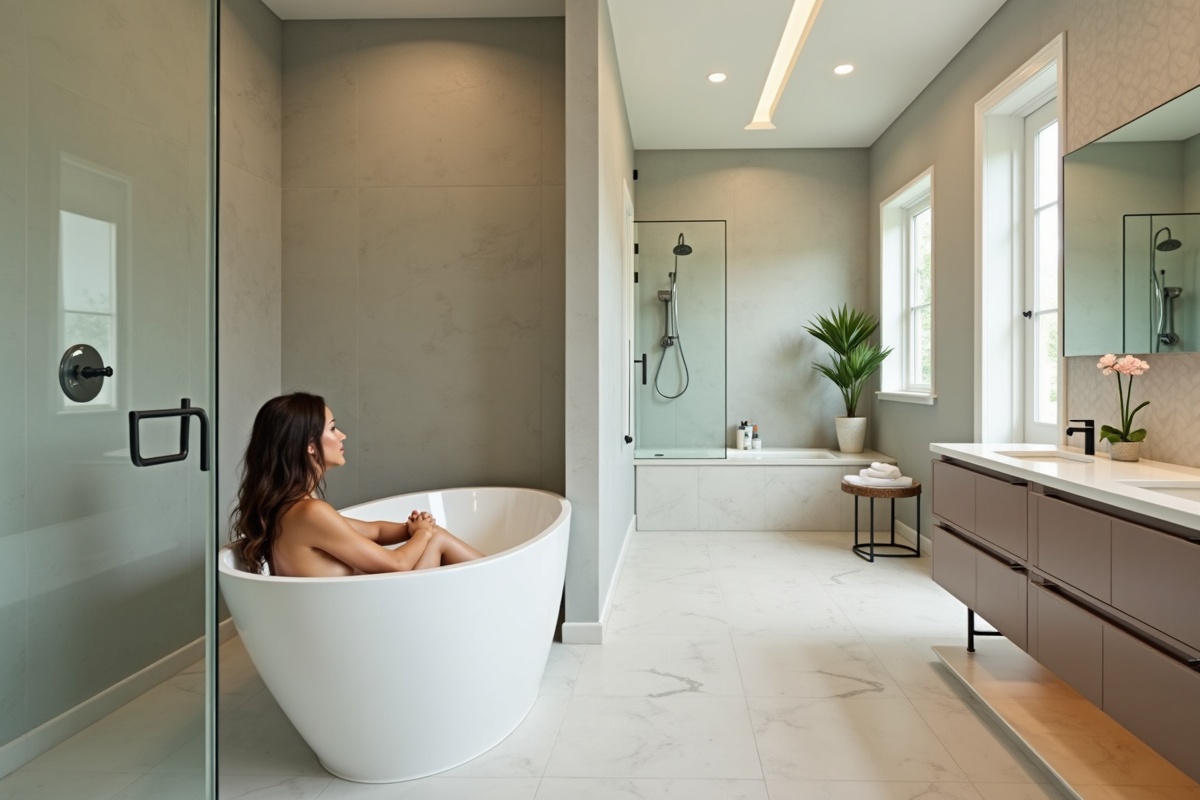
Considering a wet room for your DFW primary bathroom? Infinity Glass & Glazing fabricates and installs the floor-to-ceiling glass partition walls, mitered corner panels, wide pivot doors, and multi-panel configurations that define modern DFW wet room bathrooms. We serve Dallas, Fort Worth, Corinth, Denton, Frisco, McKinney, Lewisville, Plano, Highland Park, Preston Hollow, Southlake, and Westlake.
Get a free in-home wet room glass consultation or call (940) 279-1197.
Does a wet room require special glass compared to a standard shower?
Yes. Wet rooms typically use 1/2 in. (12mm) tempered glass in all panels, significantly larger panel sizes than standard showers (floor-to-ceiling heights of 90-120 inches are common), mitered 45-degree glass-to-glass corner joints rather than aluminum channels, and low-iron glass to eliminate the green tint visible at the larger edge exposures. The scale of wet-room glass is substantially greater than a standard shower enclosure, which drives both the thickness requirement and the preference for premium low-iron glass where edges are more visible. All shower and wet-room glass must be tempered per IRC R308 regardless of configuration.
What waterproofing membrane is used under a wet room floor?
DFW wet rooms use one of two waterproofing systems: sheet membrane (Schluter Kerdi, Laticrete Hydro Ban sheet) bonded to the substrate, or liquid-applied membrane (Laticrete Hydro Ban liquid, Mapei Mapelastic, RedGard) rolled or trowel-applied. Both are acceptable per IBC and DFW local codes when installed per manufacturer specifications. Sheet membrane is typically preferred for wet rooms because of the larger waterproofed footprint and the higher reliability at corners, seams, and drain penetrations. The waterproofing extends up all walls to at least 72 inches within the wet zone, continuous with the floor membrane, with corner and seam taping per system specifications.
Can an existing bathroom be converted to a wet room in DFW?
Yes, in many cases, as long as the existing bathroom has at least 75 square feet of total floor space and the floor framing can support the additional waterproofing load and drainage modifications. Conversion requires stripping the existing floor to the subfloor, installing new waterproofing membrane across the expanded wet zone, adjusting floor slope, installing new drainage (linear drain preferred), rebuilding the tile work, and installing new floor-to-ceiling glass panels. Conversion costs typically run $22,000-$55,000 in DFW depending on existing conditions and the scope of layout changes. Older homes (pre-1980) sometimes require framing reinforcement to handle the waterproofing and tile load.
Do wet rooms require different plumbing than standard showers?
Yes, in two key ways. First, drainage capacity: a wet room has a larger wet zone than a standard shower, so drainage must handle both shower water and any splash from the tub within the wet zone -- typically requiring a linear drain with higher flow capacity than a standard point drain. Second, water supply: wet rooms with freestanding tubs inside the wet zone need separate hot and cold supply lines for the tub filler, typically routed through the floor rather than the wall. Steam showers inside wet rooms also require dedicated electrical circuits and steam generator plumbing. Plan for plumbing and electrical rough-in during the early stages of the renovation before waterproofing and tile.
Are wet rooms difficult to maintain in a hard water area like DFW?
Wet rooms are not more difficult to maintain than standard showers, but they require the same proactive maintenance over a larger glass and tile surface area. DFW has moderately hard water (averaging 8-12 grains per gallon of hardness in Dallas, Denton, and Tarrant County municipal systems), which produces mineral spotting on glass over time. A factory-applied hydrophobic coating (ShowerGuard, EnduroShield, Diamon-Fusion) significantly reduces water spotting and extends cleaning intervals. Squeegee use after each shower and periodic deep cleaning every 2-4 weeks keeps wet-room glass clear long-term. Using a water softener for the whole house (or a dedicated shower filter) eliminates most hard-water spotting at its source.
For expert help with your project, explore our frameless shower door installation or request a free estimate.